
Can AI do lead generation for exporters? What does AI handle well, and what still needs a person?
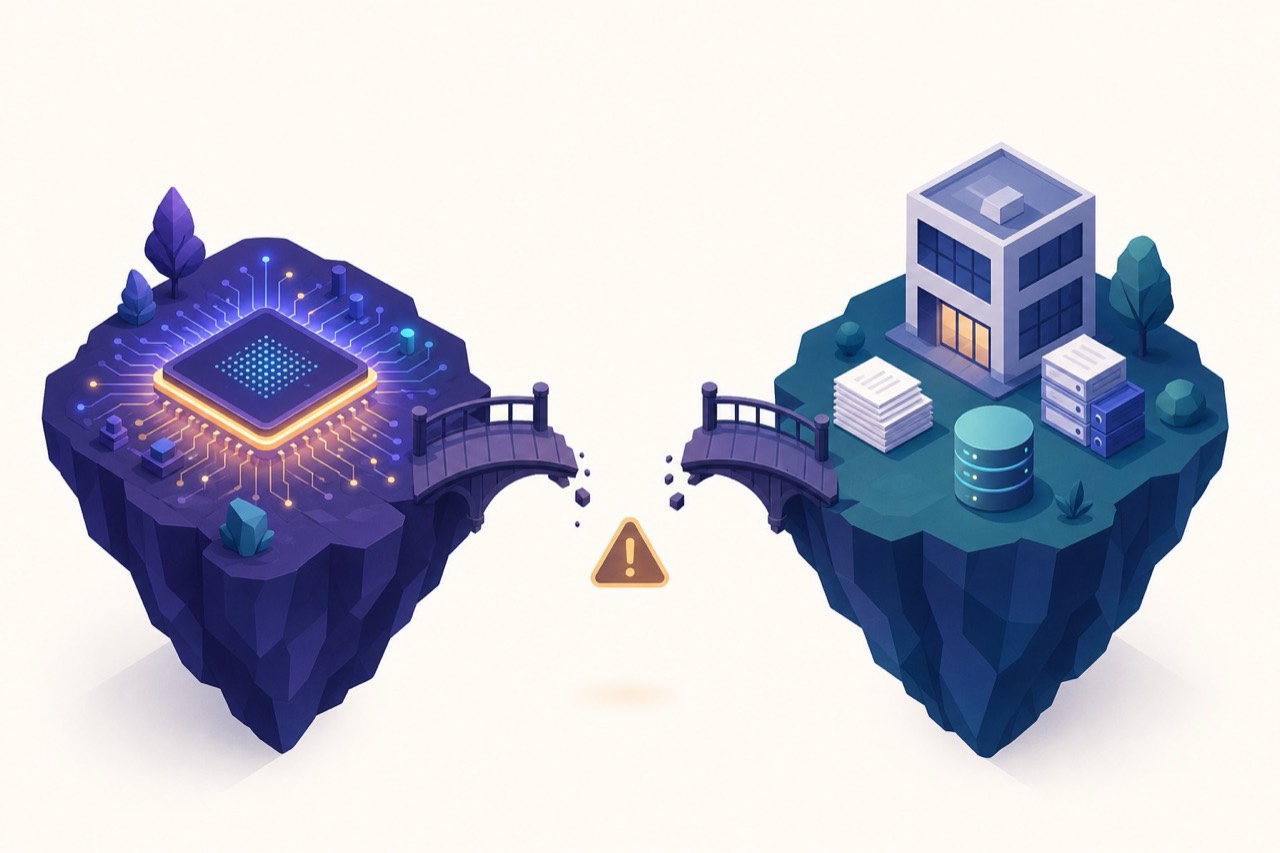
Some of it, not all of it. Split the path from prospecting to order into four stages. List building: AI can help, but it invents companies and contact details, so everything has to be verified. First outreach: AI can draft emails and messages, but results depend on deliverability and compliance, not writing speed. Answering and qualifying inquiries: the best fit for AI, because it is fast, multilingual and never off shift. Negotiating and signing: always a person. DeepSales, Singoo Cloud's AI Sales Agent, works only in the third stage.
Where does AI fit between prospecting and the order?
| Stage | What AI can do | Risk | What a person must do |
|---|---|---|---|
| Market research | Map target countries, buyer types, typical channels, trade shows and search terms | Information can be dated or generic | Cross-check with trade data and industry reports, and pick the markets to focus on |
| List building | Suggest candidate companies and summarize public information | Invents companies, emails and contact names that don't exist | Verify each company and contact; remove forwarders and competitors |
| First outreach | Draft emails and LinkedIn messages tailored to each prospect | Volume triggers spam filters and can break local marketing rules | Control volume, authenticate the domain, confirm compliance |
| Inquiry response | Reply 24/7 in the buyer's language using your product data: specs, MOQ, lead times | Making things up when the data doesn't cover a question | Supply accurate product material and define what must go to a person |
| Qualification | Ask about quantity, destination and use in the conversation, then grade intent | Wrong criteria misjudge real buyers | Set the grading rules and spot-check low-graded leads |
| Quoting | Quote standard items by your pricing rules | Anything outside the rules is not the AI's call | Write the rules and approve exceptions |
| Follow-up | Re-engage quiet buyers on a set cadence | Too many messages feel like spam | Set limits and decide what each follow-up says |
| Negotiation and contract | Nothing | — | Price, payment terms, delivery commitments, contract terms, the final yes |
| After-sales and complaints | Answer routine questions and gather order details | Handles upset customers poorly | Resolve complaints and compensation, keep the relationship |
A pattern stands out. Early in the funnel, AI produces "possibly useful information" that a person must check. Late in the funnel, everything involves commitments and money, so a person decides. In the middle, inquiry response and qualification are high-volume, rule-based and time-sensitive, which is exactly where AI does its best work.
Can you use ChatGPT to build a buyer list?
Plenty of exporters try this first: "List 50 importers of my product in Germany, with email addresses." What comes back often looks convincing. Then half the companies can't be found and most of the emails bounce. The reason is simple. A general-purpose language model is good at producing fluent text, but it is not a live company database, and when it doesn't know an answer it may produce one that merely looks plausible.
Use it as a research assistant instead:
- Ask it to explain a market: who typically buys your product in that country, through which channels, and which trade shows and associations matter.
- Have it help you build search terms and HS codes, then check them in a proper data source.
- Paste in the website content of a company you found yourself and ask what they do and what they might need.
- Let it draft a first email based on that company's business, then rewrite it in your own voice.
What not to do: load AI-generated email addresses straight into a sending tool. Invalid addresses drive up bounces and complaints, which damages your whole domain. Google requires senders to keep spam complaints below 0.3% (Google, 2024), and one bad blast can push your legitimate emails into spam as well. For the pitfalls of building lists from import records, see whether customs and trade data can find you buyers.
Will AI-written cold emails get more replies?
Not automatically. AI makes writing faster, but replies depend on three things: list accuracy, specificity and deliverability. The 2026 benchmarks put the average cold-email reply rate at 3.43%, with top-quartile senders above 5.5% and 58% of replies coming from the first email in a sequence (Instantly, 2026).
Two lessons follow. The real value of AI is not sending more, but making the first email fit the recipient better: one or two specific lines based on their product range, website and public information. And if you use AI to send ten times as many emails, you will not get ten times as many replies. Complaints and bounces tend to rise first.
How do you spot an AI lead-generation offer that's too good to be true?
Exporters are wary for good reason. Some vendors sell "AI lead generation" with promises no tool can keep. Compare what you hear with what a credible vendor says:
| Red-flag promise | What a credible vendor says instead |
|---|---|
| "Guaranteed leads every month" or "orders on autopilot" | Explains which stage the tool covers, and admits lead volume depends on your product, market and channel spend |
| "Fully autonomous, no people needed" | Explains when it hands off to a person, and that negotiation and contracts stay with people |
| "Every buyer in the country, found by AI" | Names its data sources and says lists need human verification |
| "Just watch the dashboard numbers" | Shows you real conversation transcripts, with answers traceable to your own material |
| "Your data lives on our platform" | States that customer records and chat history belong to you, and how to export them |
Credible tools are specific about their limits. For how to test each of these in a single demo, see how to choose an AI Sales Agent vendor.
Why is inbound response the best place for AI?
Because this stage is all about speed, and speed is what people find hardest to deliver. In a study published in Harvard Business Review, researchers audited 2,241 US companies: only 37% responded to a web lead within an hour, 23% never responded, and the average first response took 42 hours. Firms that contacted a lead within an hour were nearly 7 times as likely to qualify it as firms that waited one hour longer (HBR, 2011). That is domestic US data. Add a six- to twelve-hour time difference between an Asian factory and its buyers in Europe or the Americas, and the gap only widens.
In 16 years of B2B export marketing, Singoo Cloud has watched inquiries die at the door again and again: night-time messages answered the next day, minor languages nobody could handle. Inquiry handling has three traits that suit AI:
- High volume, repetitive. Most inquiries ask about specs, MOQ, lead times, certifications and price ranges. The answers are already in your product material.
- Rule-based. What counts as an A lead, and what must go to a person, can be written down.
- Time-critical. Buyers usually ask several suppliers at once. The first clear answer moves to the next round.
The condition is that the AI answers only from your material and hands anything outside it to a person rather than improvising. For grading criteria you can use, see how to tell a real buyer from a time-waster.
How are buyers using AI on their side?
Buyers are using AI too. A Gartner survey published in March 2026 found that 45% of B2B buyers used AI in a recent purchase and 67% prefer a rep-free buying experience (Gartner, 2026). The shift is sharper in industrial markets: among 258 North American industrial decision-makers, 92% had used AI tools to research suppliers in the previous 90 days, and 83% had shortlisted a supplier before speaking to anyone there (Kula Partners, 2025).
Yet buyers are not handing the decision to AI. A second Gartner survey, published in May 2026, found that 69% of B2B buyers turn to sales reps to validate AI-generated insights (Gartner, 2026). Put together: buyers do their homework with AI and arrive with specific questions, but when it is time to commit, they still want a knowledgeable person to confirm. For suppliers, that means first answers must be fast and accurate, and the right person must step in at the decisive moment. AI covers the first half; people cover the second.
What should always stay with people?
- Negotiation. Whether to discount, by how much, and in exchange for what.
- Commercial terms. Payment methods, credit terms, delivery commitments, warranty and liability.
- Contracts. Any commitment with legal force.
- Exceptions. Complaints, quality disputes, sample-fee waivers, exclusivity requests.
- Key accounts. Large and long-standing customers run on trust between people.
- Whether to take the order. Margin, capacity and risk are judgment calls for owners and sales leads.
Where should an export team start with AI?
Start with your bottleneck. AI tools are already common in the trade: in a 2025 survey of Chinese foreign-trade workers, 88.17% said they use AI tools, with AI prospecting the third most-used function at 45.55% (iiMedia Research, 2025; sample size not disclosed). The question is not whether to use AI, but where.
| Your situation | Start here |
|---|---|
| Few buyers, few inquiries | Build channels first and use AI for market research and outreach drafts. See what a B2B export lead costs by channel |
| Inquiries arrive but replies are slow, overnight or in languages nobody speaks | Hand inquiry response and qualification to AI |
| Plenty of inquiries, hard to tell real from fake, reps overloaded | Define grading criteria, then let AI qualify against them |
| Buyers go quiet after the quote | Set a follow-up cadence, then let AI run it |
What does DeepSales do here?
DeepSales is Singoo Cloud's done-for-you AI Sales Agent for exporters and manufacturers. It covers only the third stage in the table above: answering inquiries, qualifying, quoting and following up. It does not build lists, send cold email or negotiate. If you are evaluating outbound AI SDRs, see AI SDRs vs an AI Sales Agent for exporters.
- Answers 24/7 across six channels, including website chat, WhatsApp, Messenger, Instagram and LINE, following the buyer across a dozen-plus major languages.
- Answers from your own product material, quotes standard items by your pricing rules, and hands special prices, commercial terms and complaints to a person.
- Qualifies in conversation and grades leads A/B/C. A leads go to the right rep by region, language or product line with a briefing card; once a person takes over, the AI goes quiet and translation is automatic.
- Logs every lead in the built-in Singoo Cloud CRM with its source channel and ad.
- Re-engages quiet buyers with at most three follow-ups over up to three days, then moves lost contacts into tag-based long-term nurturing.
To watch an inquiry go from first message to qualified handoff, book a demo.